
Why Fall Is Microchanneling Season (And Why I Wait Until Now to Recommend It)
Throughout the year, when clients ask me about microneedling, my answer is always the same: "Let's wait for the fall and winter months."
That is not me being overly cautious. It is timing. Microchanneling is one of my favorite treatments for texture, fine lines, pores, and acne scarring, but how well it works depends a lot on what your skin is exposed to in the weeks after each session. In Georgia, that means the sun.
Now that we are into October, the timing finally works in your favor. Here is what microchanneling is, what it can do, who it is right for, and why fall and winter are the season I recommend it.
What Is Microchanneling?
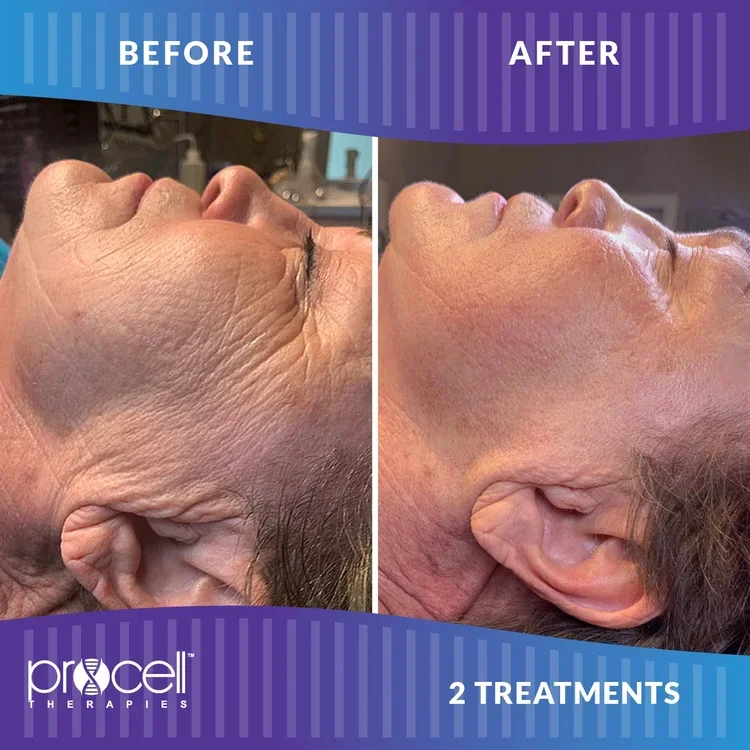
Microchanneling is microneedling evolved. At Urban Skin Care Clinic, I use Procell Therapies, which uses a microfilament array to create thousands of tiny microchannels in the skin. Those channels do two things at once: they deliver peptides, growth factors, and cytokines into the skin, and they activate your body's natural repair process to stimulate collagen.
That is why microneedling is often called "collagen induction therapy." The American Academy of Dermatology explains it simply: "It works by stimulating your body to make collagen."
Collagen is the protein that gives skin its firmness and smooth surface. We lose it gradually with age, sun exposure, and inflammation. Microchanneling gives your skin a controlled signal to rebuild.
Microchanneling vs. Microneedling: What's the Difference?
I get this question all the time, and online the two terms are often used as if they mean the same thing. Here is how I explain it to my clients.
Microneedling is the broad category. Any treatment that uses fine needles to create tiny openings in the skin to trigger collagen falls under it. Traditional microneedling is usually done with a roller or a motorized pen that moves across the skin.
Microchanneling is microneedling evolved. It works on the same collagen building principle, but the technique is much more precise. Instead of rolling or gliding, the Procell device uses a linear stamping technique that places each channel straight into the skin. Procell describes this stamping approach as designed to stop the microscopic tears and damage that traditional pens can leave behind, with less discomfort for clients.
Here is what that difference looks like in my treatment room:
- Precision. I place every channel where I want it.
- Clean channels, not scratches. The goal is a controlled channel that signals your skin to repair, without extra trauma to the surrounding tissue.
- Delivery built in. The channels deliver peptides, growth factors, and cytokines into the skin during the treatment.
- Comfort. Most of my clients are surprised by how comfortable the stamping technique feels.
| Traditional microneedling | Microchanneling (Procell) | |
|---|---|---|
| How channels are made | A roller or pen that moves across the skin | Linear stamping straight into the skin |
| Precision | Varies with the device and technique | Controlled placement |
| What goes into the channels | Depends on the serum applied | Peptides, growth factors, and cytokines |
| Goal | Collagen induction | Collagen induction |
One thing stays the same no matter which technique you choose: both are forms of collagen induction therapy, so the guidance on treatment series, sun protection, and aftercare applies to both.
What Microchanneling Treats
In my Roswell treatment room, I recommend microchanneling most often for:
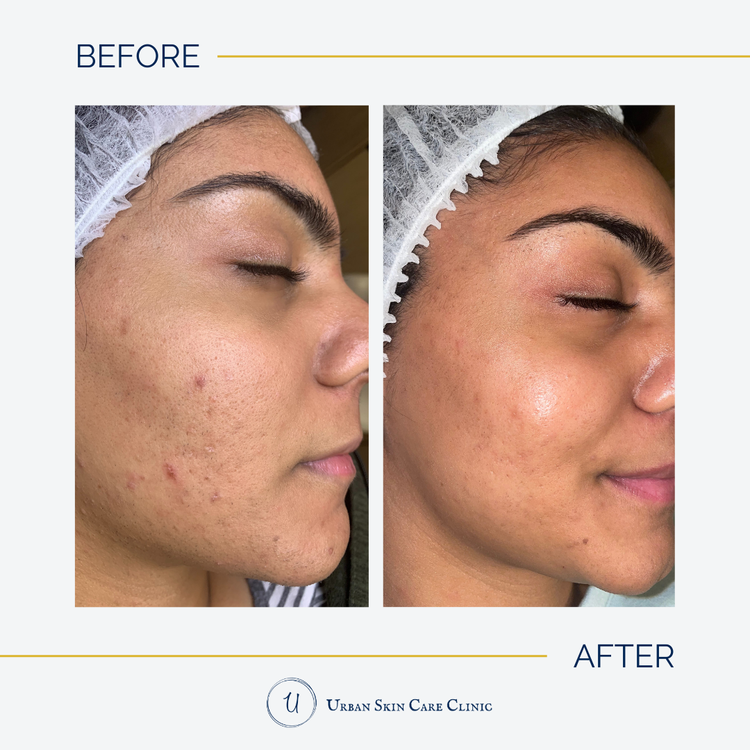
- Fine lines and wrinkles, especially around the eyes, forehead, and mouth
- Acne scarring and the uneven texture left behind after breakouts heal
- Enlarged pores and rough skin texture
- Uneven skin tone
- Overall signs of aging, when skin looks less firm or less bright than it used to
Collagen induction therapy is why I love this treatment for my clients. My acne clients come to me for the scarring and texture that breakouts leave behind. My aging clients come to me for firmness and fine lines. The same mechanism, rebuilding collagen, serves both.
Why Fall and Winter Are the Right Time
This is the part I want every client to understand before booking.
Your skin is more vulnerable after each session
Microchanneling works by creating controlled micro injuries so the skin repairs itself. During that repair window, your skin is more sensitive, and sun exposure becomes a real risk.
The American Academy of Dermatology also lists protecting your skin from the sun as part of microneedling aftercare.
UV is strongest in summer
According to the EPA, "UV intensity tends to be highest during the summer months." In Georgia, summer also means long days outdoors, pool weekends, and plenty of time in the car with sun coming through the windows. That is a lot of exposure for skin that is trying to heal.
A series takes months, so the start date matters
Microchanneling is not a one session treatment. The American Academy of Dermatology notes that treating acne scars often takes 3 to 5 treatments spaced 2 to 4 weeks apart, and that it usually takes several months to see full results. Collagen remodeling continues for months after treatment.
When you start a series in October, you finish it during the months when the sun is weakest and you are spending more time indoors. Your skin gets the full repair window it needs. By the time spring arrives, your skin is already showing the results.
One winter caution
Cold weather brings its own challenge: windburn. Sun or wind burned skin is not a candidate for microchanneling, so if your skin is raw or chapped from a windy day, we will wait until it calms down. I will always assess your skin before we begin.
Who Microchanneling Is Right For (And Who Should Wait)
Microchanneling is a great fit if you want to improve texture, fine lines, pores, tone, or acne scarring, and you are ready to commit to a series and protect your skin from the sun between sessions.
It is not right for you right now if you have:
- Severe active acne
- Flared facial eczema
- Flared rosacea
- Active sun or wind burned skin
The AAD also notes microneedling may not be right for people who heal slowly or poorly, or who have a history of keloid scars.
A note for my acne clients
If you are still breaking out, we clear your active acne first. The American Academy of Dermatology puts it this way: "If you have acne breakouts, your plan will likely begin with acne treatment," because stopping breakouts "can reduce inflammation and prevent new acne scars."
I know how frustrating that can feel. I developed adult cystic acne in my early 20s, and I spent a long time covering my breakouts instead of healing them. That experience is what led me to clinical aesthetics. What I learned is that order matters. Clear the acne, then treat the scars. That way you are not rebuilding skin that is still being damaged.
If you are not sure where your skin falls, the Acne Mapping Consultation is where we start. It is a 120 minute appointment where I look at your skin, your history, and your triggers so we can build a plan in the right order.
What to Expect During Your Treatment
Here is what a microchanneling session looks like at Urban Skin Care Clinic:
- Skin assessment. I check your skin to make sure it is ready, with no active breakouts, irritation, or burn.
- Microchanneling. The microfilament array creates thousands of tiny channels while delivering peptides, growth factors, and cytokines.
- Hydrating finish. Every treatment includes a finishing hydrating hyaluronic acid mask.
- Aftercare. You leave with aftercare serums to support healing at home.
Microchanneling downtime is minimal. Temporary redness usually fades within a couple of days.
How to protect your results
- Wear sunscreen every day, even on cloudy fall days
- Skip harsh products and strong actives for the first few days after treatment
- Avoid long periods of direct sun while your skin heals
- Use the aftercare serums I recommend
When Will You See Results?
Microchanneling is a slow build. You may see improvement within a few weeks, but full results usually take several months. In one of my own client cases, we saw visibly smaller pores and smoother texture within six months.
That timeline is another reason fall makes sense. If you start now, the months of collagen building happen during the months you need to protect your skin the most.
Investment
- Single session: $399
- Package of five sessions: $1,599
The five session package works out to about $320 per session. Because microchanneling works best as a series, the package is where most of my clients start.
Frequently Asked Questions
What is the best time of year to get microchanneling? Fall and winter. Your skin is more sensitive to the sun after each session, and UV is strongest in summer. Starting a series in the fall lets you complete it during the months with less sun exposure.
What is the difference between microchanneling and microneedling? Microchanneling is microneedling evolved. Both stimulate collagen, but microchanneling uses a precise linear stamping technique instead of a roller or pen moving across the skin. Procell designed it to avoid the microscopic tears traditional pens can leave, and it delivers peptides, growth factors, and cytokines through the channels.
Can microchanneling help acne scars? Yes, microchanneling is one of my go to treatments for acne scarring and uneven texture. Active acne needs to be cleared first.
How many sessions will I need? In my experience, most people achieve their desired results with five sessions.
Is there downtime? Minimal. Expect some temporary redness or darkening that usually fades within a few days to a week.
Ready to Start Your Fall Series?
If you have been waiting for the right time to treat fine lines, texture, pores, or acne scarring, this is it. My clients from Roswell, Alpharetta, Milton, and across the Atlanta area start booking their microchanneling series this time of year so they can finish before spring sun returns.
If you are still dealing with active breakouts, start with an Acne Mapping Consultation and we will build your plan in the right order.
Book your microchanneling session
Urban Skin Care Clinic 1195 Woodstock Rd, Loft #18, Roswell, GA 30075 (678) 995-9755
Serving clients in Roswell, Alpharetta, Milton, Sandy Springs, Johns Creek, East Cobb, Woodstock, Marietta, and the greater Atlanta area
