
By Maedeh Samimi, Licensed Aesthetician & Certified Acne Expert | Urban Skin Care Clinic, Roswell, GA
Every summer, I see the same thing in my treatment room: clients frustrated by dark spots that weren't there in April, or discoloration that seemed manageable in the winter but has deepened into something they can't ignore. If that sounds familiar, I want you to know — you didn't do anything wrong. But there is a lot happening beneath the surface of your skin right now that's worth understanding.
Let's talk about sun damage, hyperpigmentation, and what you can actually do about it this summer in the Atlanta heat.
What Is Hyperpigmentation, Really?
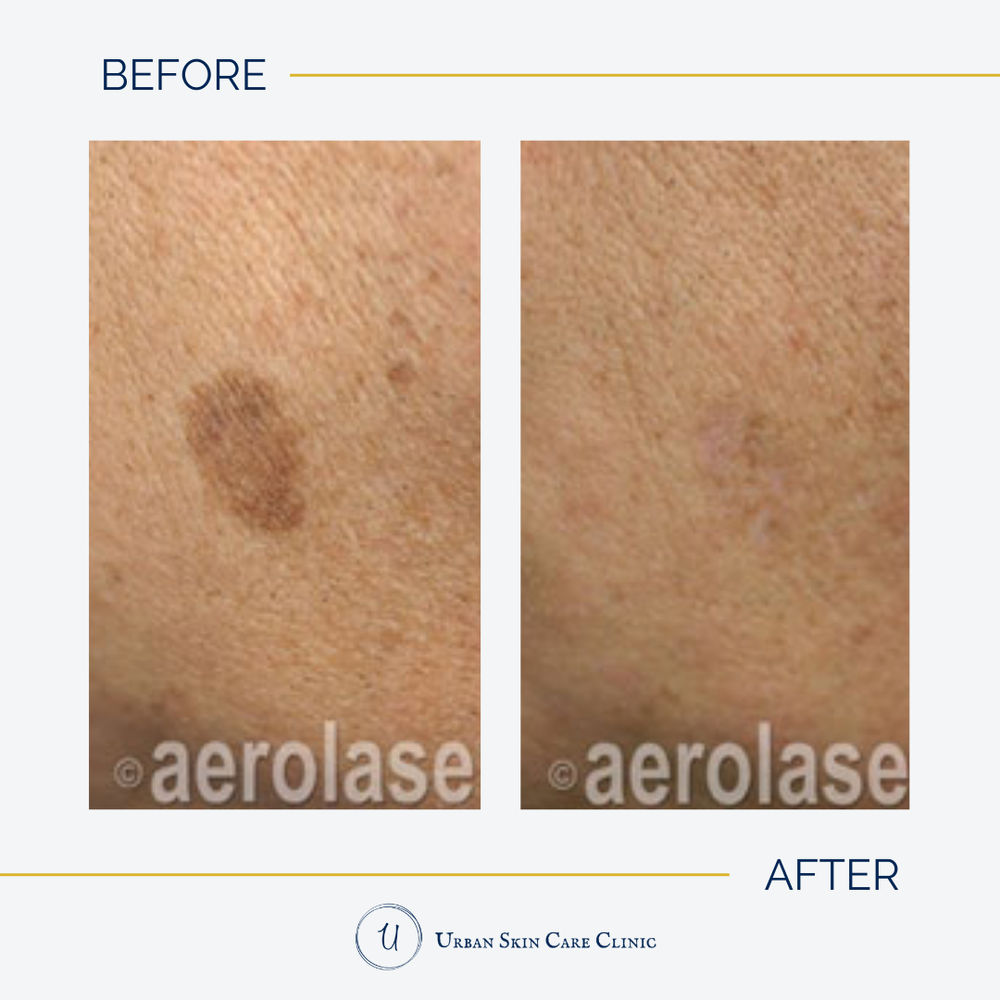
Hyperpigmentation is a broad term for any area of skin that appears darker than the surrounding skin tone. It can show up as sunspots, post-acne marks (also called post-inflammatory hyperpigmentation, or PIH), or melasma — those blotchy, brownish patches that tend to appear on the cheeks, forehead, and upper lip.
These conditions have different origins, but they share one thing in common: UV exposure makes all of them worse.
Here is why. Your skin contains cells called melanocytes, which produce melanin — the pigment responsible for your skin color. Melanin is actually your skin's built-in defense system. When UV rays hit your skin, melanocytes ramp up production to try to protect you. But when that process is triggered unevenly — by sun exposure, inflammation, hormonal shifts, or a combination of all three — you end up with uneven deposits of pigment that show up as dark spots or patches.
Why Summer Is Especially Challenging
You might already be wearing sunscreen. You might think you're being careful. And yet your pigmentation is still flaring. Here is what is actually going on:
1. UV exposure is higher than you realize. Georgia summers mean strong, sustained UV index levels from morning through late afternoon. But it is not just direct sunlight. Short walks to your car, outdoor lunches, sitting near a window — these "incidental" moments of exposure add up over weeks and months. UV damage is cumulative, and your skin remembers every unprotected moment.
2. Heat alone can trigger pigment production. This one surprises a lot of people. Even when UV rays are blocked, heat stimulates inflammation in the skin. And inflammation signals melanocytes to produce more pigment. This is why clients with melasma can experience flare-ups even on days when they have been diligent about SPF — the heat itself is a trigger.
3. Acne breakouts leave a longer mark in summer. For those of you managing active acne, summer creates a compounding problem. Sweat, heat, and increased oil production can worsen breakouts, and every breakout that causes inflammation has the potential to leave a post-inflammatory dark mark behind. The more breakouts, the more opportunity for PIH to develop and deepen.
4. The damage you see today may not be from this summer. Sunspots and discoloration that appear now can reflect UV damage that accumulated over years — sometimes a decade or more. Your skin does not always show the consequences right away. It files the damage away and reveals it gradually over time. That is why starting protective habits now matters so much, even if you feel like you are already behind.
The Three Types of Hyperpigmentation I See Most Often
Understanding which type of discoloration you are dealing with helps set realistic expectations for how it responds to treatment.
Sunspots (Solar Lentigines) Flat, smooth brown patches that appear on chronically sun-exposed areas like the face, chest, and hands. These tend to be the most straightforward to address with the right brightening protocols and consistent protection.
Post-Inflammatory Hyperpigmentation (PIH) Dark marks left behind after a breakout, rash, or any inflammation event. PIH is particularly common in medium and deeper skin tones. It often fades on its own over time, but without sun protection, it can deepen and persist for months — sometimes longer.
Melasma Larger, more diffuse patches of discoloration, often symmetrical, appearing across the cheeks, forehead, or upper lip. Melasma has a strong hormonal component and is one of the most photosensitive conditions I work with. Even careful sun protection does not always fully prevent summer flares, which is why melasma clients need a tailored, year-round management strategy.
What You Can Do Right Now
I want to give you practical steps — not a product shopping list, but a framework for protecting your progress through the rest of summer.
Wear broad-spectrum SPF 30 or higher every single day — and reapply. This is non-negotiable. One morning application is not enough for a full day. If you are spending time outdoors, reapply every two hours. If you are inside near windows, apply in the morning and once midday. For clients managing melasma specifically, a mineral-based or tinted SPF helps block not just UV rays but visible light, which can also activate melanocytes.
Keep your skin cool when you can. Because heat itself is a pigmentation trigger, anything you can do to minimize inflammation matters. Seek shade during peak UV hours (roughly 10 AM to 2 PM). If you are acne-prone, be especially mindful — heated, inflamed skin is both more likely to break out and more likely to scar.
Do not over-exfoliate in summer. I see this mistake often. People feel like their skin looks dull or uneven and respond by layering on exfoliating acids more aggressively. In summer, that approach can backfire. Over-exfoliation compromises your skin barrier, making your skin more vulnerable to UV damage and inflammation — the exact things driving your hyperpigmentation. Gentle, consistent exfoliation is the goal, not aggressive.
Support your skin barrier. A healthy skin barrier is your first line of defense against UV-triggered damage, inflammation, and moisture loss. A simple, well-formulated routine — gentle cleanser, barrier-supportive moisturizer, SPF — will do more for your pigmentation over time than a complicated regimen full of actives.
Be patient with brightening actives. Vitamin C, niacinamide, and other brightening ingredients are effective, but they work gradually. If you are using them, keep going — just make sure they are being used alongside consistent sun protection, or you will be working against yourself.
When to Bring a Professional In
Home care is the foundation, but there is a ceiling to what it can accomplish on its own — especially for deeper pigmentation, melasma, or PIH that has been building for a long time.
In a clinical setting, I can assess what type of discoloration you are dealing with, what is driving it for your specific skin, and what protocol will actually move the needle without making things worse. That means looking at your acne history, your homecare routine, your lifestyle triggers, and your skin tone — because the approach to hyperpigmentation is not one-size-fits-all.
Some treatments, like certain chemical peels and laser modalities, are better timed for fall and winter when UV exposure is lower and the risk of triggering more pigmentation is reduced. If you are thinking about those options, now is a great time to start planning so you are ready when the season shifts.
What I can say with confidence: the sooner you start protecting your progress — with the right daily habits and a plan that fits your skin — the better position you will be in heading into fall.
Related Services
NeoSkin by Aerolase® Melasma and Hyperpigmentation
The Bottom Line
Summer does not have to mean putting your skin goals on hold. It means adjusting your strategy to work with what your skin is up against. Consistent sun protection, a calm and supportive routine, and a clear understanding of your specific pigmentation triggers are what move the needle — not shortcuts or aggressive treatments that push your skin past its limits in the heat.
If you have been noticing more dark spots, uneven tone, or marks left behind by summer breakouts, I can help you map out exactly what is going on and put a plan together.
Book your complimentary skin assessment at Urban Skin Care Clinic online at urbanskincareclinic.com or call us at 678-995-9755. Our clinic is located at 1195 Woodstock Rd, Loft #18, Roswell, GA 30075.
Maedeh Samimi is a Licensed Aesthetician, Certified Acne Expert, and Laser Practitioner with 10,000+ clinical hours. She founded Urban Skin Care Clinic in February 2020 in Roswell, Georgia.
