
Is Your Skin Barrier Broken? Here's How to Tell, and What Actually Fixes It
By Maedeh Samimi, Licensed Aesthetician, Certified Acne Expert, Laser Practitioner Urban Skin Care Clinic, Roswell, Georgia
"My skin just feels off lately." I hear some version of this from my Roswell, Alpharetta, and Milton clients almost every fall. Their skin has not necessarily broken out or gotten worse in an obvious way. It just feels tight, reactive, and harder to please than it did a few months ago.
Nine times out of ten, this is your skin barrier telling you it needs support.
What Is the Skin Barrier, and Why Does It Matter?
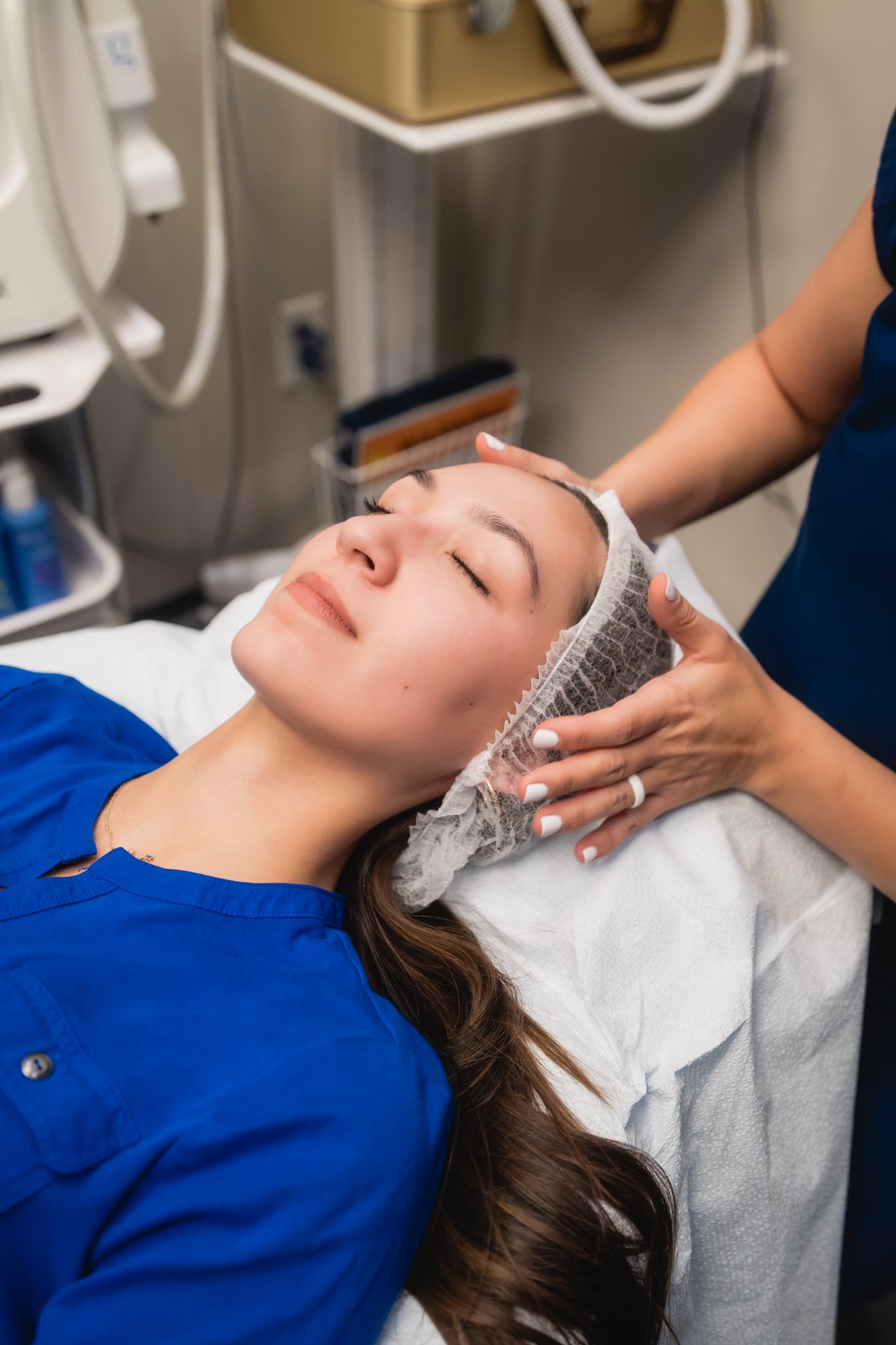
Your skin barrier is the outermost layer of your skin, and its main job is simple: keep water in and keep irritants out. Think of it like a brick wall. Your skin cells are the bricks, and a mix of natural fats, mainly ceramides, cholesterol, and fatty acids, act as the mortar holding everything together.
When that mortar is intact, water stays where it belongs and your skin looks calm, smooth, and hydrated. When it breaks down, water escapes faster than your skin can replace it, a process called transepidermal water loss. Everything else, the tightness, the sensitivity, the dullness, follows from that one basic problem.
What Are the Signs of a Damaged Skin Barrier?
The most common signs are skin that feels tight or rough after cleansing, a stinging or burning sensation when you apply products you used to tolerate just fine, ongoing dryness that heavier moisturizer does not seem to fix, dullness or a rough texture that was not there before, and new or worsening redness and sensitivity.
If several of these sound familiar, especially the sudden sensitivity to products you already own, your barrier is very likely compromised. If that is where you are right now, you do not have to figure it out alone. A skin consultation is a quick way to find out exactly what your skin needs before you spend weeks guessing.
Does Fall Weather Actually Make This Worse?
Yes. This is not just a feeling, and it is not unique to cold climates.
As humidity drops in the fall, even here in Georgia, the air pulls moisture out of your skin faster than usual. Research on seasonal skin changes has found that transepidermal water loss can increase significantly once humidity drops, and indoor heating makes it worse by drying out the air even further. Add in hot showers, which strip away the same natural fats that hold your barrier together, and you have the exact combination that shows up in my treatment room every year around this time.
Can a Damaged Barrier Cause Breakouts or Make Rosacea Worse?
Yes, and this surprises a lot of clients. A weakened barrier does not just cause dryness. Research has found lower levels of barrier lipids (oils) in skin with acne, and barrier damage is also linked to flares in rosacea and other reactive skin conditions.
Here is why that matters clinically. If your barrier is compromised and you respond by adding more active ingredients, more exfoliation, or a stronger routine, you can actually make things worse. A stressed barrier needs support first, not more intensity.
If you are already managing acne or rosacea, this matters even more. A compromised barrier can undo progress you have already made, turning a routine that was working into one that suddenly feels like it stopped, when the real problem is the barrier underneath it, not the treatment itself.
What Actually Repairs a Skin Barrier?
The most consistent, well supported answer is simple: give your skin back the same fats it naturally relies on. Look for moisturizers that list ceramides, cholesterol, and fatty acids together, since research shows this specific combination is what restores barrier function most effectively, not any one ingredient alone.
Beyond that, the changes that help most are often about subtraction, not addition. That means simplifying your routine temporarily, skipping hot showers in favor of lukewarm water, and pausing strong actives like retinoids, exfoliating acids, scrubs, and any exfoliant until your skin calms down. I know that advice can feel counterintuitive when you want to fix things quickly, but a barrier that is still healing cannot handle the same routine as a barrier that is already strong.
A note from my own history: Years ago, when I was dealing with my own cystic acne, my instinct was always to do more. More products, more actives, more effort. It took me a long time to learn that some of my worst flares were actually my barrier breaking down under the weight of my own routine, not a sign that I needed to try harder. That lesson still shapes how I build every treatment plan today.
Here is the line I give clients: if a simplified, gentle routine has not improved things within about two weeks, that is usually when I want to see you in the clinic rather than have you keep guessing at home.
What Damages the Skin Barrier in the First Place?
Fall weather is rarely the only cause. In my experience, it usually combines with habits that were already putting stress on the barrier before the season even changed.
The most common culprits I see are over exfoliating, whether from too many acids, a physical scrub used too often, or combining several actives at once, harsh cleansers that strip natural oils along with dirt and makeup, hot water, which feels good but breaks down the same lipids your barrier depends on, and skipping moisturizer on oily or acne prone skin out of fear it will cause more breakouts, when the opposite is usually true.
None of these habits are unreasonable on their own. The problem is that fall weather adds a real environmental stress on top of routines that were already asking a lot of the barrier, which is exactly why symptoms tend to show up or worsen this time of year.
How I Approach This With My Clients
When someone comes in with these symptoms, we do not just add a heavier moisturizer and call it done. We look at what is actually in their routine, how many actives they are using and how often, and whether their skin is asking for less rather than more. Sometimes the fix is a genuinely simple swap. Other times it takes a few weeks of a scaled back routine before we reintroduce anything stronger.
This is exactly the kind of assessment we do during a skin consultation, because a barrier issue that gets missed tends to undermine every other treatment you are trying to do.
Frequently Asked Questions
How do I know if my skin barrier is damaged? Common signs include tightness after cleansing, stinging when you apply products you normally tolerate, ongoing dryness that moisturizer does not fix, dullness, and new sensitivity or redness.
Why does my skin barrier get worse in the fall? Dropping humidity pulls moisture out of your skin faster, and indoor heating and hot showers make it worse by drying out the air and stripping natural oils from your skin.
Can a damaged skin barrier cause breakouts? Yes. Research has found lower levels of key barrier fats in skin with acne, and barrier damage is also linked to rosacea flares and general reactivity.
What ingredients actually repair the skin barrier? Moisturizers containing ceramides, cholesterol, and fatty acids together are the most well supported option, since this combination mirrors what your skin barrier naturally needs.
Should I keep using retinoids or acids if my barrier is damaged? Pausing strong actives temporarily while your barrier recovers tends to get you back to a healthy routine faster than pushing through.
How long does it take to repair a damaged skin barrier? Mild irritation can start improving within a few days of simplifying your routine. A more significantly damaged barrier usually takes several weeks of consistent, gentle care before it fully recovers, and pushing actives back in too soon can reset that progress.
Let's Get Your Skin Back to a Normal State
If your skin has felt off lately and nothing you are doing seems to help, your barrier may be the real issue underneath it all. Ready to figure out what your skin actually needs this fall? Book a skin assessment and consultation and let's build a plan that supports your skin instead of working against it.
Maedeh Samimi is a Licensed Aesthetician, Certified Acne Expert, and Laser Practitioner at Urban Skin Care Clinic in Roswell, Georgia, serving clients throughout Roswell, Alpharetta, Milton, and the greater Atlanta area. With 10,000+ clinical hours, she helps women understand what their skin is actually telling them, not just what is trending.
